
Issue 101: Mr. Hasbara
On what Israeli voters should actually be weighing on this fall

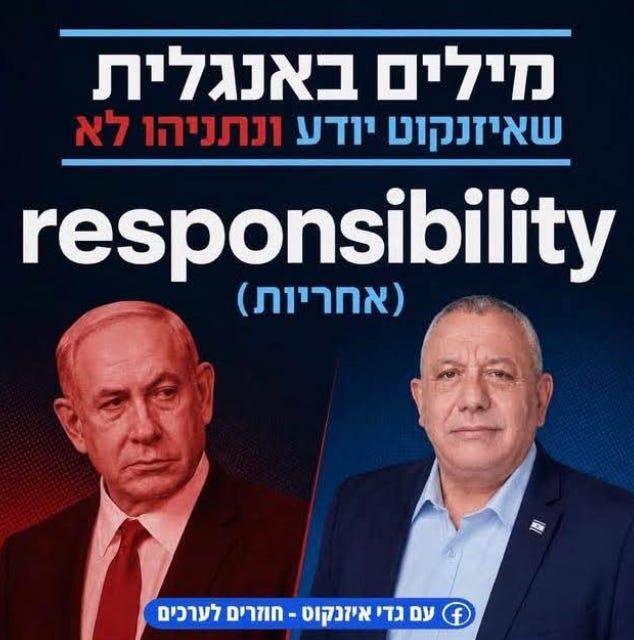
I’m biased. English is a great language - the lingua franca of our century, and anyone who speaks it or acquires it has an advantage both academically and professionally. If you’re going to learn a foreign language, start with English.
Israeli Prime Minister Benjamin Netanyahu is proof of what knowing English can do. He speaks it like someone born on the podium. He has no trace of accent, and has an instinctive feel for the American style of speech. If you didn’t know he was Israel’s premier, you’d think he was an American elder statesman or the Secretary of State. Netanyahu built his brand on English, as the indispensable interlocutor between Jerusalem and Washington, the Israeli leader who could walk across into the United Nations General Assembly and command its attention. He has played this card his entire professional career.
But for all of Netanyahu’s mastery of the English language, sometimes it has created an intimacy with US presidents that ends up doing more harm than good. Few world leaders have been called a “chickensh*t” by President Barack Obama and “f*cking crazy” by President Donald Trump.
Nor does English need to be a prerequisite for having close relations with the White House. Just look at Turkish president Recep Tayyip Erdogan’s relationship with Donald Trump. The Turkish president doesn’t utter a word of English, relies on interpreters for every exchange, and still has Trump calling him a friend at every opportunity. OK he hasn’t gotten F-35s, but sometimes a language barrier keeps things professional. Distance isn’t always a bad thing.
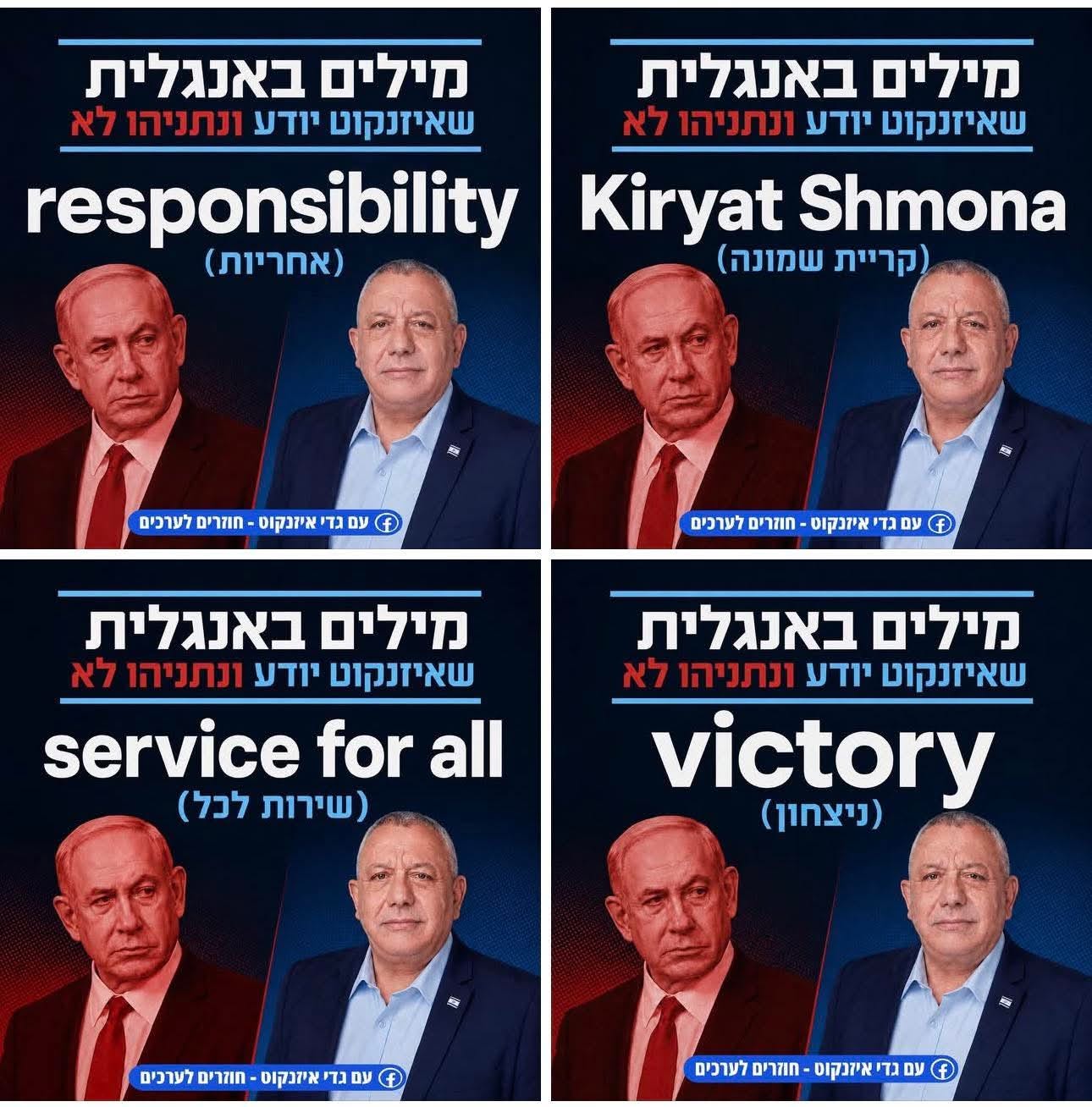
This week, Netanyahu’s team released a campaign ad mocking former IDF chief of staff Gadi Eisenkot for his weak English. Eisenkot is a career soldier. He didn’t have a Princeton professor for a father and he didn’t go to MIT. He didn’t spend his formative years switching between Hebrew and American English. This probably explains why he remains a relative unknown in the international media. The New Yorker and The Atlantic haven’t done a featured piece on him yet.

The ad was produced by Yonatan Urich, a Netanyahu advisor indicted this week for leaking classified information with intent to harm state security, and a central figure in the Qatargate scandal. This was a tasteless message on its own terms, but the messenger made it even more farcical. But it’s telling: when your best argument against a rival is his accent, you don’t have a strong offense.
Netanyahu’s English has been his calling card for forty years. His record is what’s on the ballot this fall.
Everything I’ve learned about Eisenkot suggests that if his English is his only weakness, he's a serious candidate. And if he needs someone to draft his remarks in English, my contact details are in the About section.
Want to learn more about Gadi Eisenkot? Now is a perfect time to catch up on who will likely be Netanyahu’s primary challenger:
Start with Ben Caspit’s 2024 interview with Eisenkot for Walla that was translated by The Jerusalem Post.
Daniel Gordis’ substack featured and translated segments of Eisenkot’s now famous interview with Ilana Dayan on Uvda (Israel’s 60 minutes) which you can watch here:
Finally, check out Nadav Eyal’s substack which features Eisenkot this week.


I welcome your feedback. Here is hoping for better days, for the region and around the globe.
- Gabi